
Water quality and wellbeing · 3 min
Salt electrolysis and dermatitis: how to eliminate chloramines and protect sensitive skin
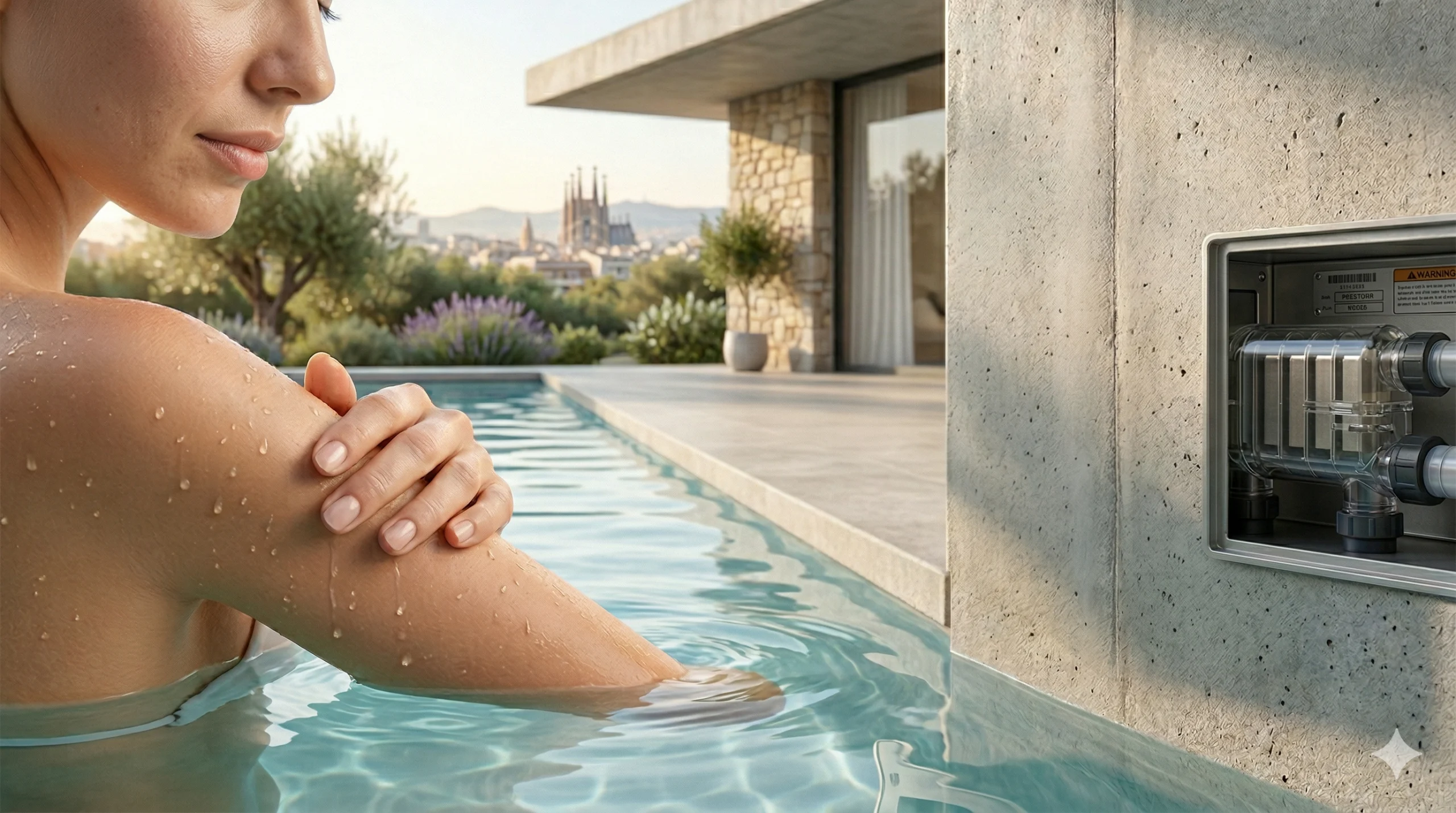
At the BSPool technical service, many users contact us looking for an alternative after suffering bouts of red eyes, severe itching or atopic dermatitis flare-ups after swimming. The general instinct is to blame “too much chlorine” and manually reduce dosing, which invariably makes water quality worse. In analytical practice, the problem almost never lies with free chlorine, but with the chemical build-up of by-products from poor manual treatment that attacks and dissolves the skin’s protective barrier.
1. The chemistry behind irritation: chloramines vs. isotonic salinity
When traditional chemical chlorine reacts with organic fluids brought in by bathers (sweat, saliva, sunscreen), it produces combined chlorine or chloramines. From concentrations of just 0.3 to 0.6 ppm, these molecules become highly volatile and corrosive to the skin’s acid mantle and the eyes’ mucous membranes.
By contrast, a salt electrolysis system works at a concentration of 4 to 5 g/l. This salinity is isotonic, very similar to that of human tears and body fluids. When immersed in this environment, a balanced osmotic pressure is created that naturally hydrates the skin instead of drying it out, preventing the flaking and redness typical of bathing in water treated with industrial products.
2. Technical factors that trigger atopic reactions
Pool water becomes hostile to sensitive skin because of three chemical imbalances that conventional chlorination cannot manage efficiently:
- Build-up of chemical residues and binders: Constantly adding chlorine tablets introduces stabilisers (cyanuric acid) and heavy metals into the pool that saturate the water and severely dry out the skin of bathers prone to dermatitis.
- Sharp pH fluctuations: Uncontrolled pH above the 7.6 threshold makes the water alkaline and harsh. In this state, the water saponifies and dissolves the natural lipids that protect the skin, causing immediate tightness and itching.
- Incomplete oxidation of organic matter: Without constant production of pure disinfectant (to meet immediate demand), organic waste is not fully burned off, driving up the chloramine levels responsible for the strong “pool smell” and chemical conjunctivitis.
3. Protocol for therapeutic water: automation and on-site production
To ensure a safe aquatic environment for skin conditions, treatment must be constant, pure and free from residual additives, with control handed over to the electronics:
- Pure chlorine production (Touch EVO / EvoBasic range): The electrolysis cell generates high-purity hypochlorous acid from salt. As water passes over the electrodes, the powerful electric field simultaneously destroys existing chloramines, returning an odourless, skin-friendly disinfectant.
- Low-salinity disinfection (Touch Evo LowSalt): For therapeutic facilities or users with extreme sensitivity, this high-performance technology enables electrolysis at minimal salt concentrations, ensuring complete disinfection with imperceptible conductivity.
- Strict monitoring and stabilisation (BSLINK and pH control): Integrating automatic pH dosing keeps the water constantly locked at 7.2. This respects the physiological pH of the skin’s acid mantle and prevents the water from becoming caustic.
-
 3 min read
Water quality and wellbeing
Filter system and salt chlorinator: technical parameters to turn your pool into a chloramine-free spa
-
 3 min read
SAFETY AND MAINTENANCE
Salt chlorination and safety: the smart technology that guarantees your peace of mind
-
 3 min read
-
 3 min read
Water quality and maintenance
Green water and extreme heat: how to recalibrate salt chlorination and filtration cycles during heatwaves
-
 4 min read
-
 4 min read
Got a question that none of our articles answers?
Our technical team replies in writing within 24 business hours, and the official service network covers all of Spain.