
Water quality and wellbeing · 3 min
Filter system and salt chlorinator: technical parameters to turn your pool into a chloramine-free spa
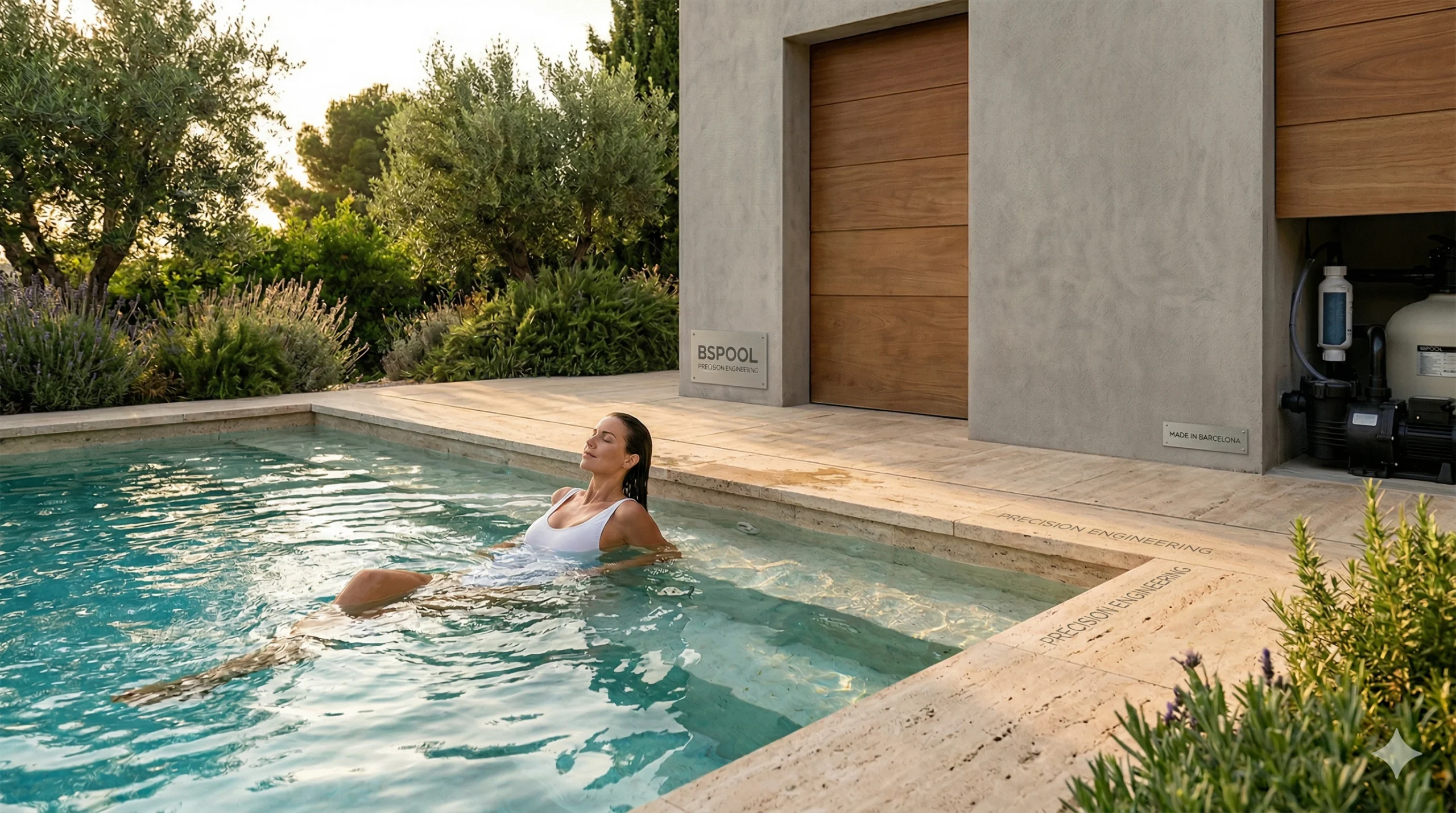
At the BSPool technical service, a recurring question from owners is how to get rid of the strong “chlorine smell”, eye irritation and dry skin to achieve a bathing experience similar to a hydrotherapy centre. The common mistake is assuming that a spa requires only pressure jets or complex hydraulic installations. Chemically, the harshness of conventional water is due to the build-up of toxic by-products from manual treatment. Integrating a filter system and an automated salt chlorinator solves this problem from the plant room.
1. The problem of combined chlorine (chloramines) vs. pure electrolysis
In manually treated pools, free chlorine reacts with organic matter brought in by bathers (sweat, creams, oils), forming chloramines or combined chlorine. When this concentration exceeds 0.6 ppm, the water becomes highly irritating to mucous membranes and produces that characteristic “chlorine smell” that is wrongly associated with cleanliness.
When a salt electrolysis system is installed, the water passes continuously through the titanium cell. The strong electric field generated between the electrodes not only produces high-purity hypochlorous acid, but also destroys the chloramines in the circuit through direct oxidation, returning an odourless disinfectant to the pool that does not dry out the skin or affect the airways.
2. Physico-chemical factors for achieving the “Wellness” standard
For water quality to reach therapeutic levels, especially beneficial for bathers with dermatitis or psoriasis, the filtration and electrolysis system must keep three values constant:
- Precise salinity (4 to 5 g/l): This concentration is almost imperceptible to taste and very similar to that of human tears. It provides slight buoyancy that reduces muscle fatigue and acts as a natural emollient balm for the skin’s lipid barrier.
- Strictly stabilised pH (7.2 – 7.4): A fluctuating pH or one above 7.6 cancels out the effectiveness of chlorine and is harsh on skin tissue. Automated dosing ensures the water maintains a perfect neutrality that respects the pH of human skin.
- Elimination of cyanuric acid: Using commercial chlorine tablets introduces artificial stabilisers that saturate the water (chemical lock) and force drain-downs. Electrolysis disinfects without adding accumulating residues, ensuring genuine water sustainability.
3. Automation protocol for a complete home spa
The transition to a wellness ecosystem requires handing water supervision over to precision electronic components that react to fluctuations before the user notices them:
- Smart control unit (TOUCH EVO range): Adjusts disinfectant production to the water’s actual demand, avoiding the chemical harshness peaks typical of manual dosing.
- Continuous analytical control kits: Fitting the installation with pH and redox potential (ORP) probes makes it possible to measure the water’s oxidising capacity millivolt by millivolt, adjusting electrochemical production without human intervention.
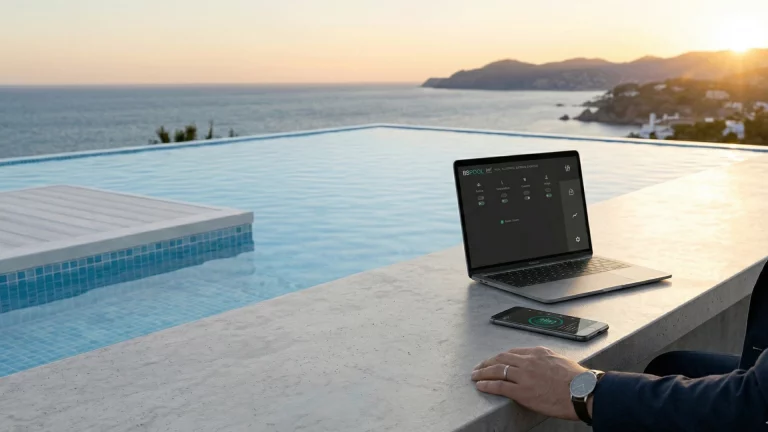
- Comprehensive remote monitoring (BSLINK): Through the IoT module, users can check the temperature, adjust filtration hours and verify that disinfection parameters are optimal from their smartphone before getting in the water.
-
 3 min read
Water quality and wellbeing
Salt electrolysis and dermatitis: how to eliminate chloramines and protect sensitive skin
-
 3 min read
SAFETY AND MAINTENANCE
Salt chlorination and safety: the smart technology that guarantees your peace of mind
-
 3 min read
-
 3 min read
Water quality and maintenance
Green water and extreme heat: how to recalibrate salt chlorination and filtration cycles during heatwaves
-
 4 min read
-
 4 min read
Got a question that none of our articles answers?
Our technical team replies in writing within 24 business hours, and the official service network covers all of Spain.